14-04 Extrasolar Planets
Is the solar system formation model
described in the previous section a correct one?
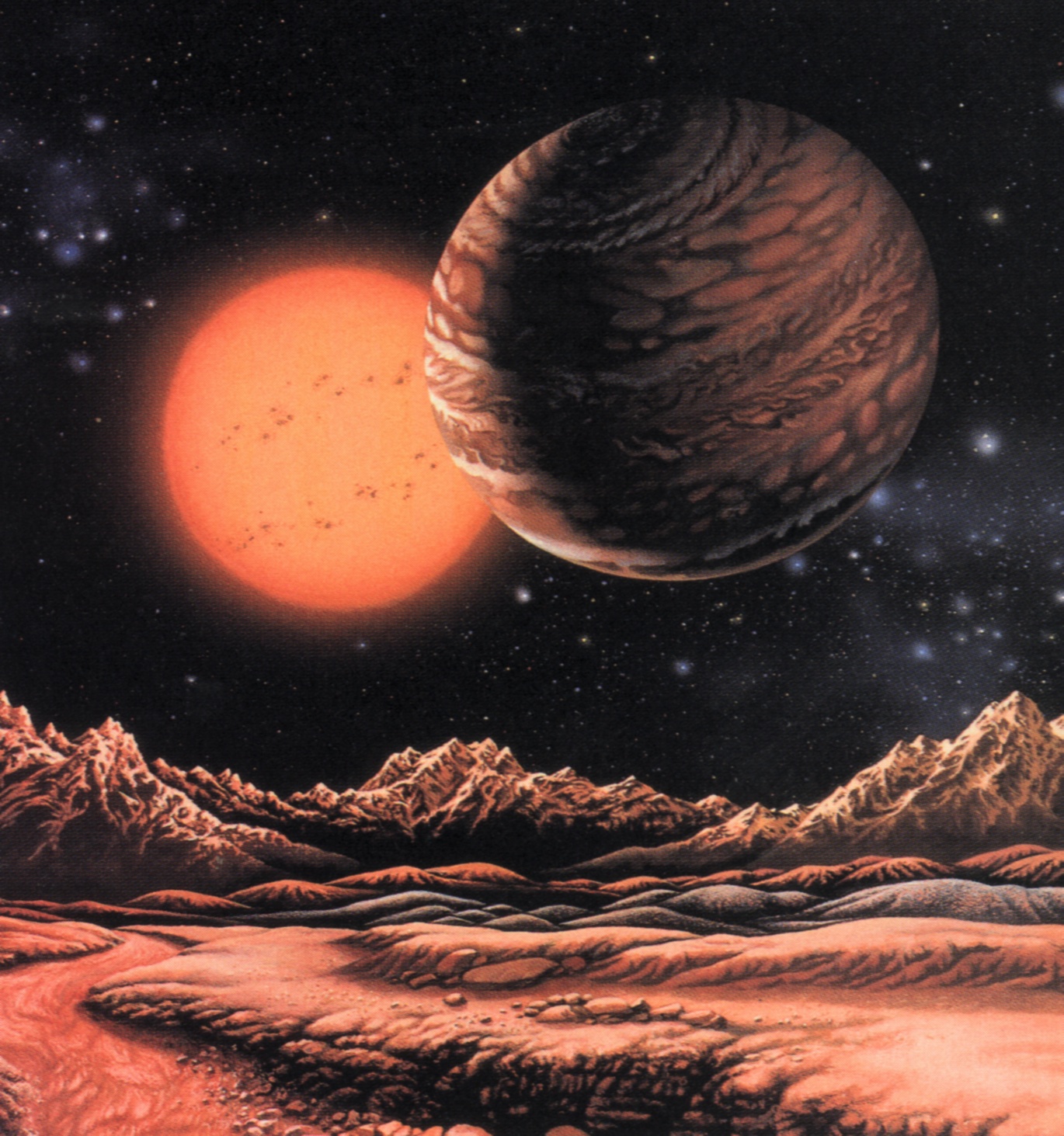
Extrasolar planets are too dim and too close to their parent stars
to observe directly.
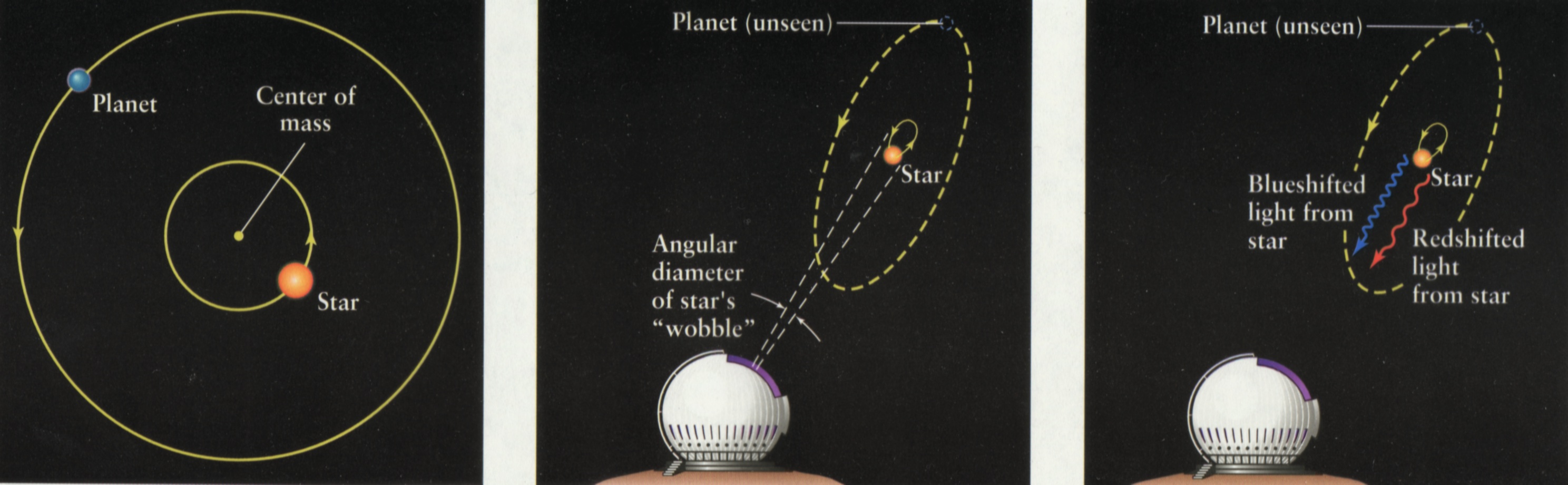
The method of determining masses in a single-line spectroscopic binary
was exploited to find
the first extrasolar planet orbiting 51 Pegasi in 1995.
The mass function:
m23sin3q
/
(m1+m2)2
=
v13P
/ (2pG)
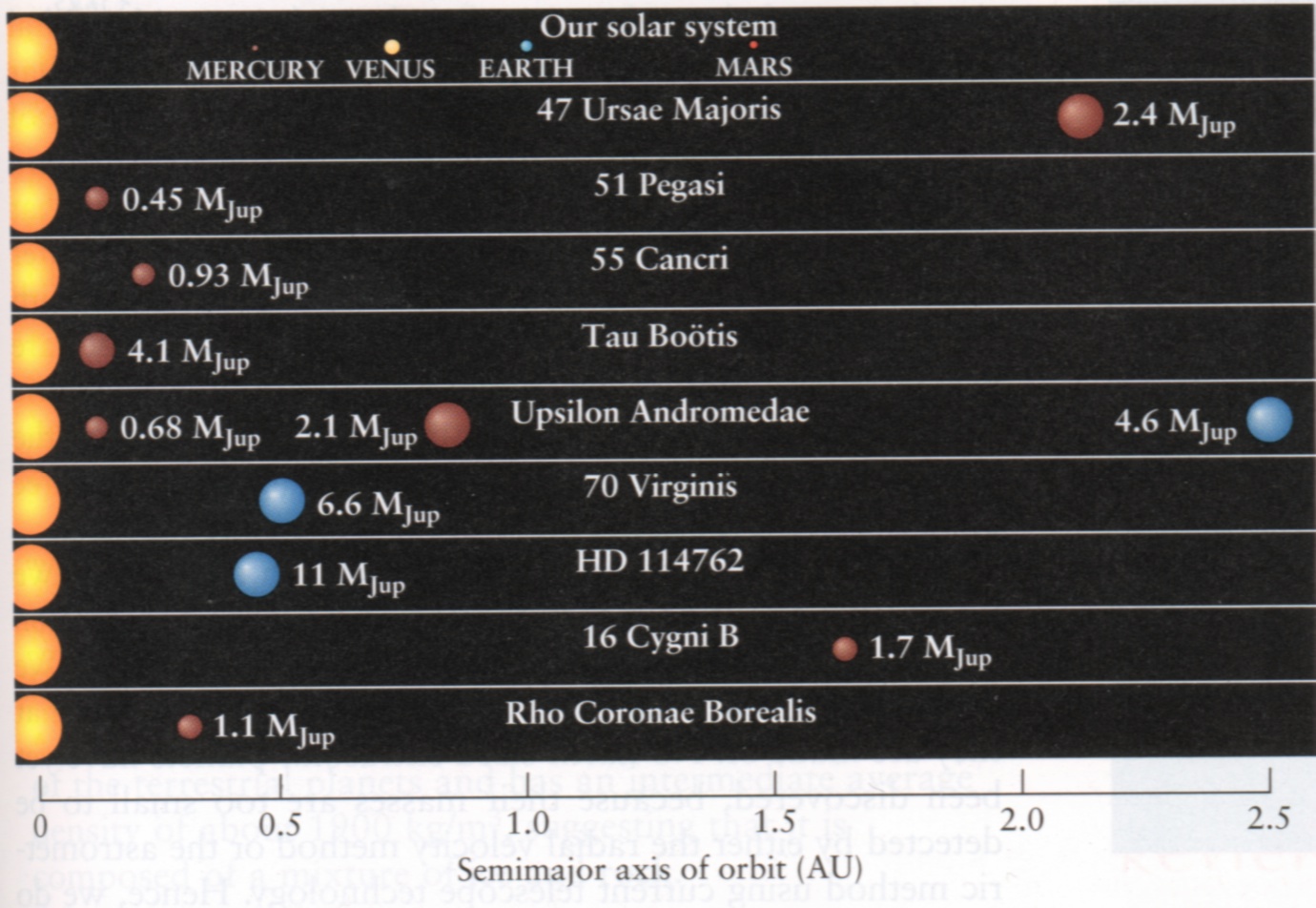
The number of detected extrasolar planets is increasing rapidly!
(For updated information, check
Exoplanet Data Explorer.)
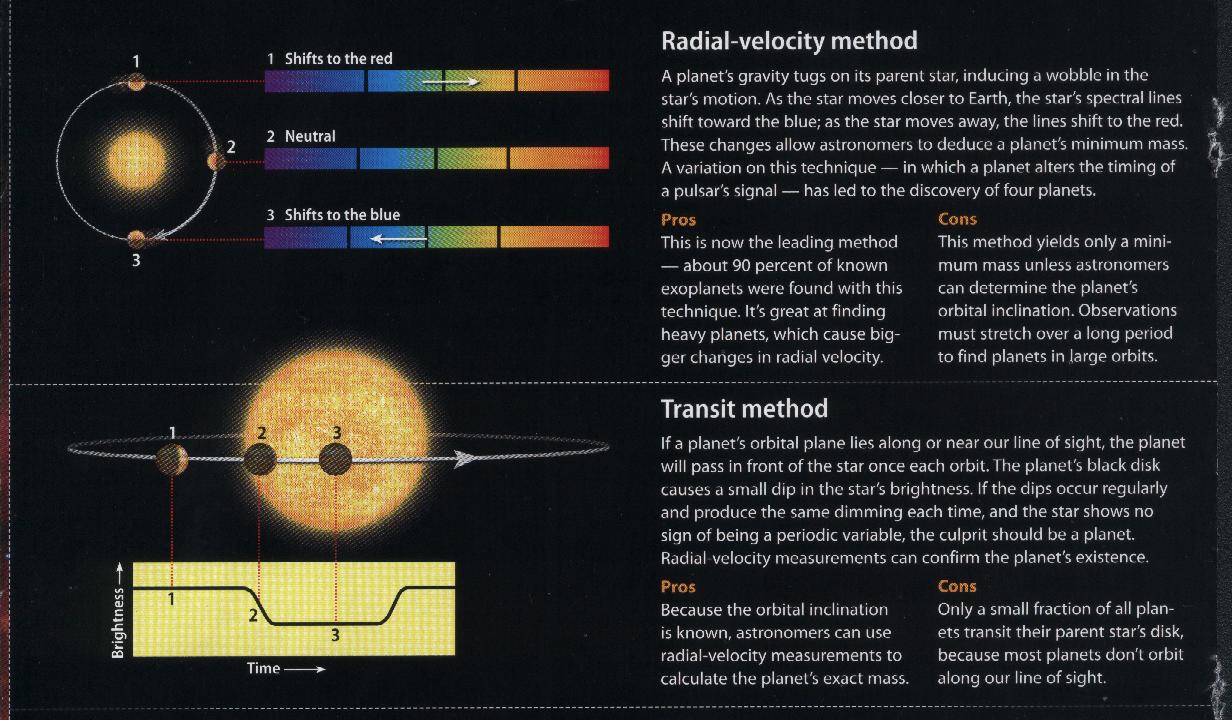
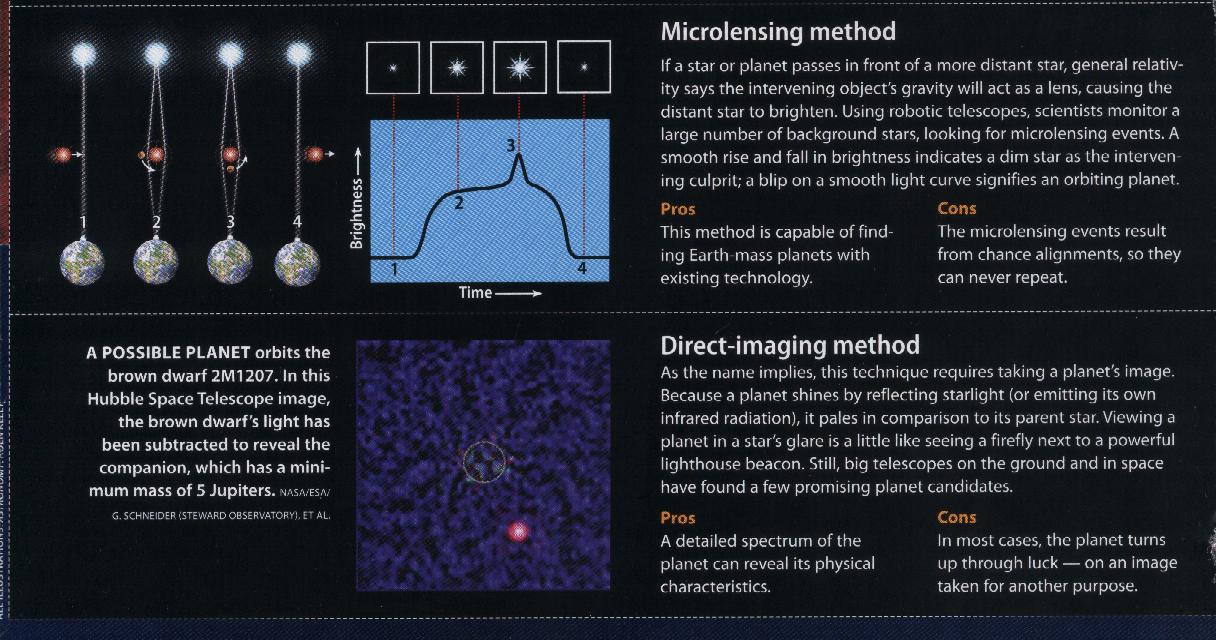
The 4 methods to detect exoplanets:
radial velocity, transit,
microlensing, and direct imaging
But, challenges to the model of planet formation: they all have large masses and
small orbital radii; many of them have large eccentricity.
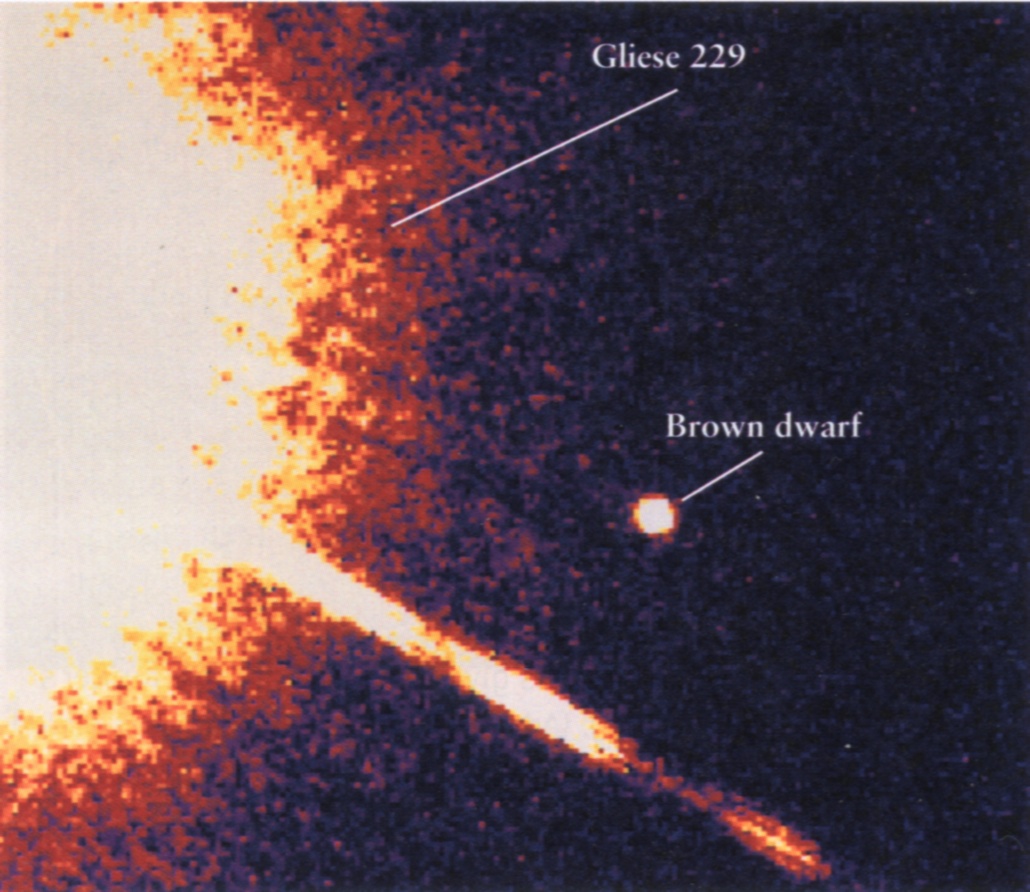
Extrasolar planets vs brown dwarfs
red dwarfs (0.08 -- 0.8 solar mass)
brown dwarfs (0.013 -- 0.08 solar mass)
The Kepler mission
uses the transit method. Earth-like exoplanet candidates have been found...